
This is a video of an Independent Mental Health Advocate (IMHA) talking about his experience working at the Maudsley hospital in London.
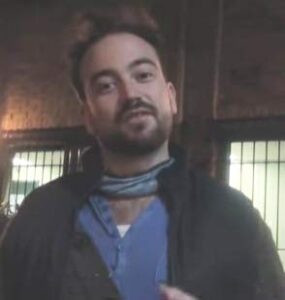 An IMHA is a person trained in the Mental Health Act 1983 and supports people to understand their rights under the Act and participate in decisions about their care and treatment.
The video is from 2014 and highlights the use of excessive force in psychiatric hospitals as well as denying patients their rights. It’s a message that remains relevant today. At CCHR UK, we regularly receive reports from people who have suffered similar experiences as those described by Jake.
For human rights in mental health to become a reality, there’s a need for more people like Jake to speak out about the barbaric practices that go on in the name of “healing”. If you have a similar story to tell or if you have been a victim of psychiatric abuse, please get in touch by filling in the abuse report form.
At the bottom of this article, there is more information about violations of human rights.
Note: there is a transcript below the video if you would prefer to read the story rather than watch the video.
Transcript
==========
Hi, My name’s Jake for the last year or so I’ve been working here at the Maudsley Hospital. I’ve been working as an Independent Mental Health Advocate and what that is, is if a person is detained under the Mental Health Act they have a right to see an independent advocate. We’re not part of the mental health system as such we work for an independent charity.
What we do is we support people to understand their rights and to exercise their rights so that might include explaining sectioning to them or accompany them on a ward round to support them to ask questions to the doctors. Because we’re not part of the mental health system we have a slightly different viewpoint to a lot of professionals. I think we see it quite a lot from the patient’s viewpoint so we hear a lot about the things the patient’s are unhappy with or if they’re afraid of saying these things to the professionals they will talk to us so we maybe get a slightly different insight into the mental health system.
As a patient in a psychiatric ward you’re in a very very difficult situation you know. You’ve lost your freedom. You’re taken away from your friends and family. You’re forced to take medication you don’t want to take. the more angry you get the more chance of that being seen as part of your illness.
I see people come into the hospital they get worse from what I’ve seen. I’ve seen people get worse because they get so upset about being imprisoned in hospital and they start acting up and that is seen as their illness.
Interviewer: You use the word imprisoned in hospital do you see this hospital as similar to people being imprisoned?
Some of my clients have told me it’s worse than in prison. I’ve worked with people who’ve been in the prison system as well and they said at least in prison they don’t force you to take medication and you know when you will get released. I’ve heard that two or three times people say they actually prefer prison.
Regarding medication, every single person I’ve worked with in the last year has been given antipsychotics almost immediately on entering hospital with or without their consent. Either agreed to it or they’re coerced into it or they’re just frankly forced to take it. So regardless of the diagnosis it’s always antipsychotics.
It’s normally the same drugs, almost everyone is given one of the same four medications. If one doesn’t work they try another one. Normally the first drug they try is risperidone then well then they try olanzapine.
If these drugs don’t work they try the older antipsychotics like haloperidol and for the people who don’t respond to anything they will try a clozapine which is a another antipsychotic. It has lots of side effects and the person has to be really closely monitored but yeah, everyone is given these drugs regardless of diagnosis.
Most of the people on the wards, I’ve worked with people diagnosed with some kind of psychotic illness so not so much depression, or believing unusual things, paranoid ideas so those kind of problems. Now a lot of people don’t want to take an antipsychotic. I don’t think I’ve met a single patient who had anything positive to say about antipsychotics.
I’ve seen people develop diabetes very young. You see people very bloated. Everyone complains about a sort of stiffness. A lot of people complain about a kind of apathy, difficulty concentrating, depression. These kind of symptoms. You see people with these kind of Parkinson’s disease symptoms, sort of shaking and their tongue is flicking in and out and that’s from long-term treatment with antipsychotics. And it’s irreversible treatments that people have quite good reasons to object to these drugs. I mean would you want to take them knowing no side effects?
But once the person objects to the drugs then they will be forced into taking the drugs and there’s not really much negotiation. Even though within the Mental Health Act there’s a separate document called the Code of Practice that has things in it like the participation principle. Patients should participate as much as possible in the treatment. There’s the least restriction principle and any intervention should be the least restrictive as possible.
From what I’ve seen these principles are not really followed. As soon as the patient disagrees with the medication they are coerced or forced into taking it. So as soon as you disagree with professionals you’re in trouble basically and you will get people who have three different diagnoses depending on which psychiatrist they’ve met, they get a different diagnosis but if they question the diagnosis that’s seen as part of their illness and it’s used to justify forced treatment.
… in the staff room in the hospital and they are talking about a patient who’s refused his medication. I’ve met the patient and had a conversation with him, maybe five minutes before. He got quite upset, he wasn’t showing any signs of extreme distress, wasn’t having the medication. So all the staff were getting ready to restrain him in the staff rooms.
They were talking about what they were going to do, putting their gloves on. They were sort of organizing. They seemed to be talking about it in a very nonchalant way that, as if, you know “this is just what we have to do, he’s not taking his medication”. So they took him into one of the activity rooms the wards need, they’ve got a mattress on the floor, and I didn’t actually see the restraint but I went in the room afterward, and he was sat on the mattress crying because he was so sort of traumatized by what happened.
And this wasn’t someone who was violent. This wasn’t someone who was trying to get out or trying to hurt anybody or anything like that. It was just somebody who didn’t agree with the medication that been prescribed by the doctor.
People I work with they do have insight into the problems they’re experiencing but they just don’t see it was due to an illness. So a person might say to me that they’ve had a breakdown because of a very stressful experience or from a childhood trauma, or they were withdrawing from psychiatric medication and this caused them to sort of go a bit haywire. So people do have an insight but they don’t agree that they are mentally ill and they’re not alone in this.
There’s a lot of debates about mental illness I mean the British Psychological Society recently called for a move away from diagnosis saying that these diagnoses are not backed up by any strong science.
People might argue that this type of force of treatment “is necessary because the people are so unwell this is the only thing we can do to help them. So we’re doing something they don’t want to do but you know, it’s the only thing. We don’t like to do it but we have to do it”. That’s the kind of argument used.
Now I’m not a medical professional or a doctor but all I can say is I’ve met clients and patients, whatever you want to call them, I’ve been told, “you know this person’s very dangerous, this person’s very unwell, they’re probably too unwell to speak to you, you know, be careful”. And when I’ve sat down with the person and given them the opportunity to calm down and speak about their frustrations and things like that on the ward, they’ve actually, you know, calmed down, had a very normal conversation with me. But because the staff are always kind of checking up on the person or getting them to do things they don’t want to do they don’t see that side of the person, they just see this kind of angry individual and that’s just pathologized and seen as part of their illness.
So I fully appreciate people do get themselves into terrifying and dangerous situations and it’s real. I’m not saying that, you know, these problems don’t exist but to take someone who’s gone into this extreme state of mind, to lock them up, to force them to take powerful tranquilizers, to not listen to them – I don’t see that it’s the best way to help the person….
So you look at the patients pacing up and down, see you’re locked up, you’ve got no one who’s talked to you, got nothing to do, so how do you think people have been acting? It’s such a bizarre place to be and I don’t see how the person can recover. That probably explains why they have to medicate the people so much because just to tolerate being in hospital.
But there’s been quite a lot of stuff in the media about restraint in mental health I think Mind or Rethink or someone like that. The campaign against facedown restraint and you hear a lot about this.
I think there’s a wrong perception about this. People think that restraint happens when the person is being aggressive and they need to be controlled. In those cases okay fair enough. You know that it might be necessary to stop a person from hurting himself or someone else, but all of the restraints that I’ve witnessed, or I’ve been told about by my clients, have been because people were given a depo injection – so that means they’ve been given an injectable medication that you take monthly or fortnightly instead of the tablets – now people have objected to this either saying they don’t want the medication or they would prefer tablets. When the people object to it they are held down and restrained face down and injected with the medication.
I had a lot of people tell me that’s happened. These are not people who are being violent or being aggressive. All they’re doing is refusing to have an injection and asking for tablets instead. From the point of view of the professionals, they want the person medicated so they’re subdued. They’re not doing anything dangerous. They want the person on the medication so they will do almost anything to get the person to have the injection.
A lot of the time they don’t restrain the person but they threaten to restrain the person so they will say “if you don’t take your meds, if you don’t take the injection we’re going to restrain you”. Because it’s such a terrifying experience being restrained, people will consent to the injection just for that reason.
Just to say these medications, always psychotics these are the injectable medications. It’s not as if someone’s in the kind of frenzied state, and they try to sedate the person to calm down, these are sort of long-term medications. So there’ll be cases when a person is simply saying “I don’t want an injection, I would rather take my medication in tablet form”.
From what I’ve seen they won’t hesitate to then use physical force on that person, I mean I’ve seen people crying and shaking and absolute distress following being held down and restrained and you know this is a psychiatric hospital. A lot of the patients here have a lot of fears, they feel they’re being persecuted. They have a lot of sometimes strange ideas about being kidnapped, sort of hunted and things like this, so can you imagine how it’s gonna be for a person like that to be forcefully taken by six people, held down and injected?
But what I’ve seen the professionals don’t seem to appreciate the impact of what they’re doing. They just see it as you know this is the medication that’s best for the person, the person doesn’t agree because they don’t understand the illness, so then we’re going to use force. So there’s no attempt at negotiation. There’s a lot of stuff in the mental health code of practices or in the policies of the hospital about restraint as a last resort, so if the person’s acting violently, you tried to speak to them try to calm them down, you know, give them space, find out what’s bothering them all of that, this is done. But when the person is refusing the medication that seems to go out the window and they will go straight in with the restraints.
So you hear a lot about stigma in mental health, there’s a lot of anti-stigma campaigns and a lot of funding to sort of fight the stigma. What these campaigns want is for us to be comfortable to talk about mental illness so I can say to somebody I’m mentally ill but I’m not ashamed of it, happy to talk about it. I think there’s good intention behind this campaign because we don’t want people to be stigmatized but what about the people who disagree that they’re mentally ill?
Most of the clients I work with don’t see themselves as mentally ill so wouldn’t that be the best type of anti-stigma to tell them they’re not mentally ill – you might have got into this terrifying bizarre situation but we don’t have to label you. You’re sick you know, let’s find out what’s happened to you and let’s do something about it.
But as soon as you label someone then all of their behaviour is going to be interpreted on the basis of that label because if someone’s angry because they’re locked up in hospital that might be seen as part of their illness. And this kind of labeling just destroys the communication between the clients and the professional. If the client doesn’t agree there’s no sort of starting point, there’s no scope for negotiation. Everything they have to say can potentially be silenced on the basis that they don’t know what they’re saying, because they’re unwell.
This is a big debate that’s happening outside of the hospitals. A lot of people are calling in to question this whole idea of mental illness because if you are looking at psychiatric diagnosis there’s no blood test, there’s no brain scan or anything like that. What they do, they interview the patient and they look for certain symptoms. If the person’s hearing voices, if they’re feeling depressed, if they’re speaking in a kind of fast or exaggerated way. These kinds of things. They will look at the symptoms and then they kind of look at the statistical clusters of symptoms and that’s how the diagnosis is arrived at.
So there’s no actual, no physical tests. So people are having debates about, well should we even be using this approach, if we were labeling people as mentally ill before the stigma that comes with it? Shouldn’t we be looking at this as emotional distress or look at is this as a social problem?
So these debates are happening and anti-stigma campaigns should be supporting people saying “you know what, I’m not mentally ill, bad things happened to me, I’m not a sick person who needs to be drugged” and that’s what I think anti-stigma campaigns should be about.
But people experience you know, told me “oh I was just at home and they came and kicked my door down and handcuffed me and dragged me off to hospital”. As people have these memories of horrible experiences they don’t want anything to do with mental health services. But then the more they try and get away from services and all of this justifies the kind of forced treatments.
So I work with other people who are on Community Treatment Orders so that basically gives the hospital the power to recall the person, so they’re living in the community but they can be called back into hospital. In reality, because people are so terrified of going into hospital the CTO is just used as a way of coercing people to take their medication.
Now many many clients, who absolutely hate the medication, but because of the CTO they’re terrified of being taken back into hospital so they take the consent to treatment but only from fear.
If you imagine the type of resentment that’s going to create between the professionals and the clients. But the more the clients get angry and push away from the professionals the more they’re labeled as lacking insight and the more forced treatment is used.
Interviewer: Can it not in any way be therapeutic when a lot of the time people have to believe that what they are taking is going to do them good. If they don’t believe it’s doing them good and it’s not going to be therapeutic anyway would you say?
I’ve seen people who are very psychotic and very confused and then when the medication has kicked in they do come back down and you can speak to them but even then they would rather be psychotic than be on the medication because of the way it makes them feel is so unpleasant.
… Compassion is free. Doesn’t cost anything to treat someone like a human being, spend time with them, get to know them and talk to them about normal things. Not about their illness and the medication just normal conversation… I’ve spoken to the student nurses who told me they’ve been told off for being too friendly to patients, which frankly it’s disgusting. A person in a crisis, that’s what they need, they need compassionate support. So you don’t need the fancy psychotherapist of five years of training, just have a normal human conversation.
I had a client who was told she had a psychotic illness, needed anti-psychotic medication. She disagreed with that and felt that what she was experiencing was more of a psychological issue and she wanted support from a psychologist. So she got a psychologist to come and visit on the wards and really enjoyed it and felt like she was getting somewhere. Now I saw her being told by a psychiatrist on the ward, that because she believed psychology could help her this was evidence that she was ill and needed to be sectioned. And I’m not making that up… so as soon as you questioned their very very narrow, so fixed way of looking at things, they won’t hesitate to force you.
There is a perception that ECT isn’t used anymore. People think it’s some barbaric thing from the past, but it is still used. It’s used in this hospital. The professionals would say that it’s a last resort and is very effective when everything else fails.
I haven’t seen it used many times but the people I’ve seen it used on, people that if you did spend time with them, talking to them, they talk to you and they certainly weren’t catatonically depressed. I was quite surprised it was used.
There was one case of an elderly gentleman who’s been given ECT against his will. The argument they were using was that he didn’t have the capacity to consent to ECT. To be honest, the way they use the argument was because he disagrees with ECT, therefore he doesn’t have the capacity because he doesn’t understand it’s good for him, so we’ll give it to him anyway.
This is something I’ve seen a few times. Now this was an elderly man. He sat alone in the ward, every time I went in the ward he was sat in the corner on his own. When I sat with him and spoke to him we have a laugh. When we had a chat, especially when he was sort of complaining and talking about you know the ECT, he kind of opened up with me. We talked about all sorts of things really good, normal conversation but this is a man who’s considered so unwell that the only way to help him is to force him to have an electrically induced seizure in his brain. That’s the only way they think they can help them. But if they just sat with that person, spoke with them, treat them with a little respect you could help them.
The argument with ECT is that it saves lives. The idea is the person is so depressed and catatonic they’re not speaking, you give them the ECT they kind of come out of it. okay, maybe that’s the case. Well what I’ve seen it’s people who are clearly speaking being forced to have ECT.
To be honest I’ve been very surprised by the level of conversion and forced treatment because the Mental Health Act has a sort of guideline document called the Code of Practice that explains how professionals should use the Mental Health Act, and it contains things like their participation principles and that patients should participate in any decisions made.
We also have the least restriction principle that any intervention should be the least restrictive as possible so you restrict the person only as much as you need to. In reality I’m not seeing it work like that. The patients don’t really get any say in their treatment. They meet the doctor for 10 minutes once a week who tell them what drugs to take. If they don’t take the drugs they’ll be forced into taking the drugs.
There’s also a kind of reward/punishment system because if you’re sectioned you can still have some leave. So you’ll be allowed to go out and come back in and that’s often used as, I’ve seen it a few times staff have said “if you behave yourself we’ll let you go out for your break” and that’s totally against what leave is for. It’s supposed to be a way of getting someone sort of used to being out and about, stopping them getting institutionalized, getting them ready, you know, to be discharged.
But here it’s used as a sort of bartering tool to say you know if you do what you’re told and take your medication we’ll let you have a bit of leave. And often if people come back late from their leave they will automatically lose their leave and they see it as a punishment….
==============
Human Rights Violations
The above video touches on a number of human rights issues. Following are links to particular Articles of the Human Rights Act 2000 which came into force in the UK in October 2000:
- Article 2: Right to life
- Article 3: Freedom from torture and inhuman or degrading treatment
- Article 5: Right to liberty and security
- Article 6: Right to a fair trial
- Article 7: No punishment without law
Antipsychotics – The Facts About The Effects
For more information about antipsychotic drugs and their effects, download this guide.


This accurately describes the childhood I experienced because of absolute cretins misdiagnosing high IQ as psychosis. I also have a state that if you complain about physical pain it almost always get’s dismissed as psychosomatic by nurses and doctor who even refuse to do a basic examination. I was suffering from a triple bulging disk which the doctor ignored for months. When I finally got admitted (a longstanding struggle for my rights) for an examination where it was confirmed, the psych wards reaction was to restrain me after 2 staffers stampeding on my back ‘for being a smartass’. Many of my ‘peers’ were being given the same kind of ‘care’.