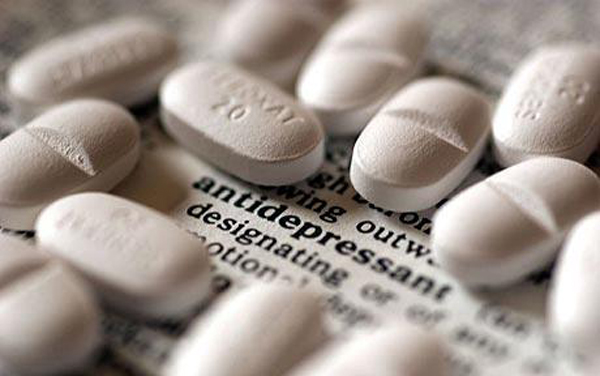
Various media outlets have been warning of potential shortages of, among other pharmaceutical products, antidepressant drugs. One article in a national newspaper presented a dire warning, noting: “according to Mark Samuels, who heads industry body the British Generic Manufacturers Association, the situation is ‘worse than at any time I’ve experienced during my career’.”
In view of the controversy that consistently swirls around the prescribing of this classification of drug, there are several ways of viewing this kind of alarming announcement and the potential ramifications.
Form a pharmaceutical company perspective, which is a commercial enterprise perspective, it represents the potential of increased profits. The economic formula of demand and supply dictates that when there’s a shortage of a given product, prices will rise when demand is greater than supply. So for Big Pharma, the future looks profitable as prices increase.
For the prescribing psychiatrist, there’s a dilemma. The use of psychiatric drugs like antidepressants, coupled with psychiatric propaganda about their efficacy, has produced a lucrative market. Those taking the drugs have been led down the garden path, with a narrative that has fooled many those on the prescribed drugs.
The dilemma: for decades, the drugs have been prescribed on the premise they were resolving a so-called ‘chemical imbalance of the brain.’ It has represented an impressive marketing strategy, generating billions in revenue for the manufacturers based on the idea that people thought something therapeutic was happening when on the drugs. However, that bubble burst in July 2022 when researchers from University College London dispelled the idea of the chemical imbalance. The decades-long prescribing pattern was hung on the theory that levels of serotonin had something to do with depression. The authors of the research however stated the following:
“The serotonin theory of depression has been one of the most influential and extensively researched biological theories of the origins of depression. Our study shows that this view is not supported by scientific evidence. It also calls into question the basis for the use of antidepressants.”
Then there is the humanitarian perspective. There is a long list of effects that go hand-in-hand with taking the drugs.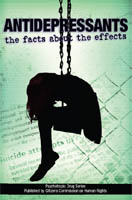 CCHR has produced a leaflet, Antidepressants: the facts about the effects, which does just that – it gives the facts about the effects.
It’s a list which, if widely publicised, would likely impact on the sales of antidepressants. The effects of the drugs are paradoxical; they include but are not limited to violence, aggression, suicidal thoughts and suicidal behaviour. And when things go wrong, psychiatrists have a tendency to blame any fatalities on a person’s perceived mental troubles in an attempt to avoid responsibility and accountability for their prescribing habits.
Concerns have been raised in regards to children and adolescents who have been prescribed a psychiatric drug. It has been suggested more than a million children between the ages of five and 18 may not have access to an antidepressant licensed for under-18s if the shortage hits. Considering the effects such as suicidal ideation and suicidal behaviour, and in consideration of the parents who have experienced the indescribable pain of losing a child to suicide who was taking the drug, the shortage of antidepressants appears to have a silver lining.
Any proposed treatment of any kind should be accompanied by all of the relevant information, good and bad, so that the person can make a fully-informed choice and thus be in a position to give informed consent. If this became a reality, any shortage of antidepressants would be irrelevant on the basis that people would not accept a prescription drug with potentially fatal outcomes.