
The cost of psychiatric treatment can be contentious on the basis that a person can be detained, treatment can be involuntary, and treatment can be continuous for lengthy periods of time.
Information can be obtained under the Freedom of Information Act (FOI) which allows members of the public to see how much is being spent in psychiatric hospitals when treating people.
An FOI request was sent to Sussex Partnership NHS Foundation Trust in January 2020 to request information on the number of beds in hospitals governed by the Trust and the cost of treating a person.
Based on the information provided, there are 293 beds in 8 facilities located in East and West Sussex. The cost of ‘general acute admission’ is £462.97 per day. The weekly cost for treatment per person is therefore £3,240.79 while the cost per year is £168,984. If all of the beds are occupied, then the yearly cost to taxpayers would be £49.5 million.
Two of the hospitals governed by the Sussex Partnership have clinics which use electroconvulsive therapy (ECT). These clinics are located at Meadowfield Hospital (formerly Swandean Hospital) in Worthing and at the Department of Psychiatry in Eastbourne District General Hospital.
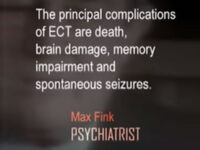
ECT or electroshock is used on a voluntary and involuntary basis. It’s contentious however as recipients are not informed of the liabilities and debilitating effects that occur when they are subjected to the procedure.
According to the FOI data, there were 4155 ECT treatments given at Meadowfield Hospital from 2011 to 2019. At the Department of Psychiatry in Eastbourne, there were 7553 ECT treatments.
As with all psychiatric treatments, there are debilitating effects that can severely affect a person’s ability to function in life. ECT is no exception. An FOI request was sent in October 2021 to the Sussex Partnership making the following request, “Please provide leaflets or other material given to the patient relating to and explaining the side effects of ECT, any dangers associated with the procedure, and the expected outcomes of the treatment.”
The Trust replied with the following, “Under the Act the Trust does not have to provide you with a copy of this information if one of the exemptions in the Act applies. In this case, the Trust considers that Section 22 [word added] applies (information intended for future publication), so will not be providing you with a copy of this information.”
Based on information leaflets that have been provided by other Trusts, patients are not being fully informed about brain damage, organ failure and other physical damage that can occur as a result of ECT treatment.
For more information about ECT, and to assist a person to make a fully informed decision, watch Therapy or Torture – The Truth About Electroshock.