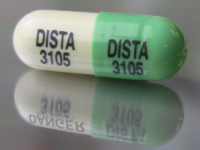

When psychiatrists tell or advise their patients that they should take antidepressants, they may not be advising or telling their patients about the long list of effects that go hand-in-hand with their prescribing habit.
It was World Suicide Prevention Day on 10 September, an appropriate time to let people know that the list of effects that go along with antidepressant usage includes suicidal thoughts and suicidal behaviour. It’s an extraordinary situation that prescribers and their marketing strategists work hard to either suppress or explain away the paradoxical effects with all sorts of psychiatric rhetoric.
The following is an explanation that hopefully puts the drugging practice in perspective. Putting a foreign substance such as a psychiatric drug into the body disrupts the normal biochemistry. Sometimes, the disruption creates a false and temporary feeling of euphoria, short-lived bursts of increased energy or an abnormal sense of heightened alertness. However, it’s not natural to feel like this. The feeling doesn’t last and addiction can result.
Psychiatric drugs work by influencing the normal functions of the body: they speed them up, slow them down, dam them up or overwhelm them. This is why people get side effects with the drugs.
But don’t think the drugs heal anything. They are intended to cover up or ‘mask’ problems. Meanwhile, they tend to wear out the body. As well as the mental effects mentioned above, other side effects include anxiety, agitation, panic attacks, insomnia, nightmares, trembling, exhaustion, irritability hostility and aggressiveness.
Side effects can sometimes be more pronounced than a drug’s intended effects. They are, in fact, the body’s natural response to the invasion of a chemical that’s confusing its normal functions.
It’s vital for a person to know the truth about the drugs. Informed consent is defined as follows – ‘the person must be given all of the information about what the treatment involves, including the benefits and risks, whether there are reasonable alternative treatments, and what will happen if treatment does not go ahead.’
On this basis, it could be that informed consent is not a reality for many people. They may agree to take the drugs,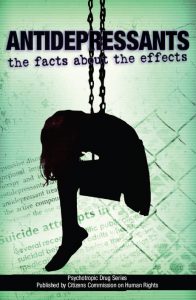 but it may be based on uninformed consent.
CCHR produced a series of booklets to inform people of the facts about the effects linked to different categories of psychiatric drugs. The booklet about the effects of antidepressants is a free download from the website and is aimed at helping a person make a more informed choice. It could even prevent a person from becoming another statistic.