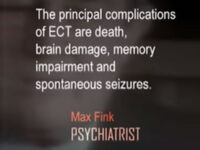
 The psychiatric treatment electroconvulsive therapy (ECT) was the focus of protesters who gathered in Central London on Tuesday. The protest coincided with the start of an international congress put on by the World Federation for Mental Health (WFMH) at Central Hall in Westminster.
ECT or electroshock, which involves the application of high-voltage electricity to the brain, is the target of humanitarian groups calling for an outright ban on its use due to the damage being caused, specifically permanent memory loss and permanent brain damage.
The elimination of coercive psychiatric practices, including ECT without informed consent, has been the subject of reports from the World Health Organization and the United Nations Human Rights Council. The WHO condemns coercive psychiatric practices, which it says, “are pervasive and are increasingly used in services in countries around the world, despite the lack of evidence that they offer any benefits and the significant evidence that they lead to physical and psychological harm and even death.”
In England, there are 79 clinics registered with the Royal College of Psychiatrists where ECT is delivered every week. At least 36% of shock victims in England are subjected to ECT against their will.
An Open Letter from the Citizens Commission on Human Rights (CCHR) was delivered to the organisers of the Congress in support of the WHO and the UN reports demanding that psychiatry move away from coercive practices and towards human rights.
ECT has been shrouded in controversy since it was conceived by psychiatrist Ugo Cerletti who saw pigs in a Rome slaughter house become more docile after being shocked prior to slaughter.
Psychiatrists have consistently denied causing brain damage. Instead, they claim the procedure is new and improved, that it’s safer. But Brian Daniels, the national spokesperson for CCHR in the UK, says that any improvements in the procedure are not for the benefit of the patient.
In modern ECT, anaesthetics and paralysing agents which prevent the patient writhing and screaming can make the shock procedure appear less barbaric but that is for the benefit of the person watching. The anaesthesia and paralysing drugs raise the seizure threshold, requiring more electricity to induce a convulsion.
Brian Daniels, national spokesperson for CCHR in the UK said, “A strong position must be publicly taken against mental consumers being forcibly electroshocked and coercively treated. CCHR is bringing these matters to the attention of the WFMH and visitors to the Congress to support the elimination of coercive psychiatric practices.”