 Bereaved families, affected by the tragedy that recently occurred in the state of Iowa, will be in the thoughts of many people following the Perry High School shooting. A student, named as 17-year-old Dylan Butler, shot six people, fatally injuring one before dying of a self-inflicted gunshot wound.
Attention as always, turns to why these tragedies are occurring. There can be numerous reasons for mass murder, violent crime and suicide. There can be just as many solutions proposed to curb it where funding is poured into its prevention. But despite this, senseless acts of violence continue unabated.
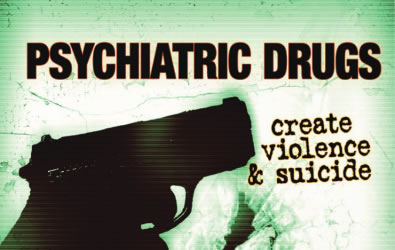
One aspect that has never been the subject of a government investigation is the link between heinous acts of senseless violence, such as school shootings, and those people who were under the influence of mind-altering psychiatric drugs which are documented to cause violence, mania, psychosis, depersonalisation, and even homicidal ideation.
With millions of people prescribed psychiatric drugs, clearly not everyone taking them will experience these effects. However, according to International Drug Regulatory Agency warnings, a percentage of them will. And no one knows who will be next.
At least 39 school shootings and/or school-related acts of violence have been committed by those taking or withdrawing from psychiatric drugs, resulting in 200 wounded and 100 killed. In other school shootings, information about their drug use was never made public. Whether they were under the influence of prescribed drugs was neither confirmed nor refuted.
In the wake of such tragedies, the media quote experts saying such individuals are “mentally disturbed,” or have “untreated mental illness.” This however doesn’t explain the level of violence observed, what drives a person to pull a trigger or what drives a person to intentionally crash an airplane, killing all 150 people on board.
A review of scientific literature published in Ethical Human Psychology and Psychiatry regarding the “astonishing rate” of mental illness over the past 50 years revealed that it’s not “mental illness” causing the problem; rather, it’s the psychiatric drugs prescribed to treat it.
CCHR is clear that not every violent killer has been documented to be under the influence of, or withdrawing from a psychotropic drug at the time of committing a crime. But in many cases, prescribed drugs only emerge when investigative reporters probe the killer’s background. And the media does not always ask the right questions.
Rather than accepting the regular psychiatric mantras quoted in the media, legislative hearings should be held to fully investigate the correlation between psychiatric treatment, violence and suicide. Toxicology testing for psychiatric drugs should also be mandatory in cases where someone has committed a mass shooting or other serious violent crime.
The information gathered could become part of a national database that all branches and levels of law enforcement could access and it could present a whole new dimension to the cause behind some of the acts of senseless violence.